Industrial Cleaning Solvent vs. Aqueous Cleaning Solution: What’s Best for Your Application?
January 5, 2026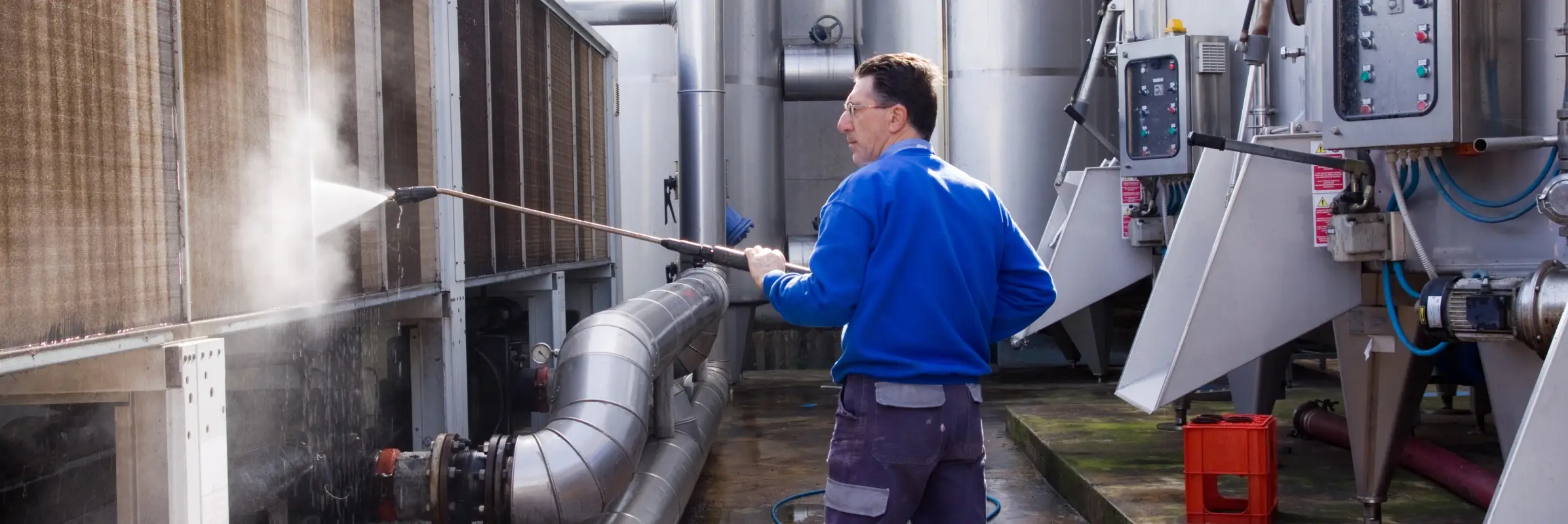
What Is a Solvent Cleaner?
April 2, 2026
Factory Cleaning Equipment 101: Understanding Industrial Parts Washers
Every manufactured part tells a story of the processes it has been through. Cutting, stamping, machining, forging: each step leaves behind residues like oils, metal chips, coolant films, and carbon deposits. If those contaminants aren’t removed before the next stage of production, they can compromise coating adhesion, interfere with precision assembly, cause premature component failure, or trigger costly quality rejections. That’s why factory cleaning equipment is essential infrastructure in modern manufacturing. And among the many categories of cleaning technology available, industrial parts washers are the workhorses that keep production moving.
At Niagara Systems, we’ve been designing and manufacturing industrial washing systems since 1934. In this guide, we’ll walk you through the fundamentals of factory parts washers: what they are, how different types work, and what to consider when choosing the right system for your facility.
Common Cleaning Challenges in Manufacturing
Every manufacturing environment generates contaminants, but the specific challenges vary widely depending on the industry, the parts being produced, and the processes involved. Understanding these challenges is the first step toward selecting the right factory parts cleaning machines for your operation.
Evaporation, Rinsing, and Drying
Factory floors produce a wide spectrum of soils. Machining operations leave behind cutting oils, coolants, and fine metal chips. Stamping and forming processes deposit drawing compounds and heavy lubricants. Heat treating creates oxide scale and carbon deposits. A single production line may generate several different types of contamination, each requiring a different cleaning approach or chemistry to remove effectively.
Complex Part Geometries
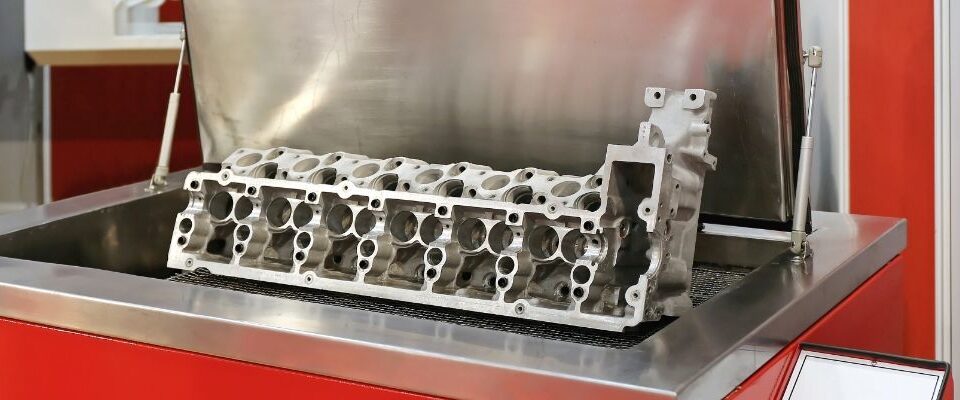
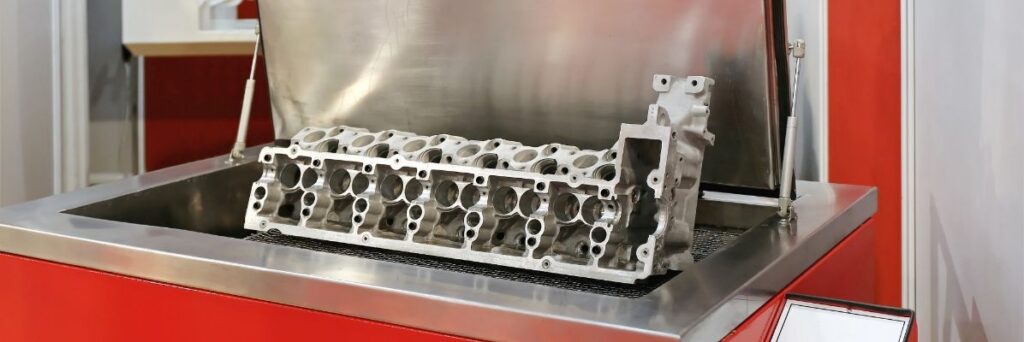
Many manufactured components have features that make thorough cleaning difficult: blind holes, narrow internal passages, threads, undercuts, and intricate cavities. These areas trap contaminants that simple spray washing or manual scrubbing can’t reach. Factory component cleaning for parts like engine blocks, hydraulic valve bodies, or medical implants requires systems specifically engineered to access and flush these hard-to-reach surfaces.
High-volume throughput demands
In fast-paced production environments, cleaning cannot become a bottleneck. Automotive plants, for instance, may need to process thousands of components per hour without interruption. Manual cleaning methods simply cannot keep up, and even batch-style washers may fall short when continuous, inline cleaning is required.
Consistency and repeatability
When cleaning is done by hand, results vary from operator to operator and shift to shift. For manufacturers held to strict cleanliness specifications, particularly in aerospace, medical devices, and food processing, this inconsistency creates compliance risk. The challenge is producing the same verified level of cleanliness on every single part, every time.
These are real-world problems that modern factory parts washers solve. The key is matching the right type of washer, cleaning chemistry, and system configuration to your facility’s specific combination of challenges. Check out our Machine Selection Guide to figure out exactly what type of factory parts washer you need.
Why Parts Cleaning Is Important for Manufacturers
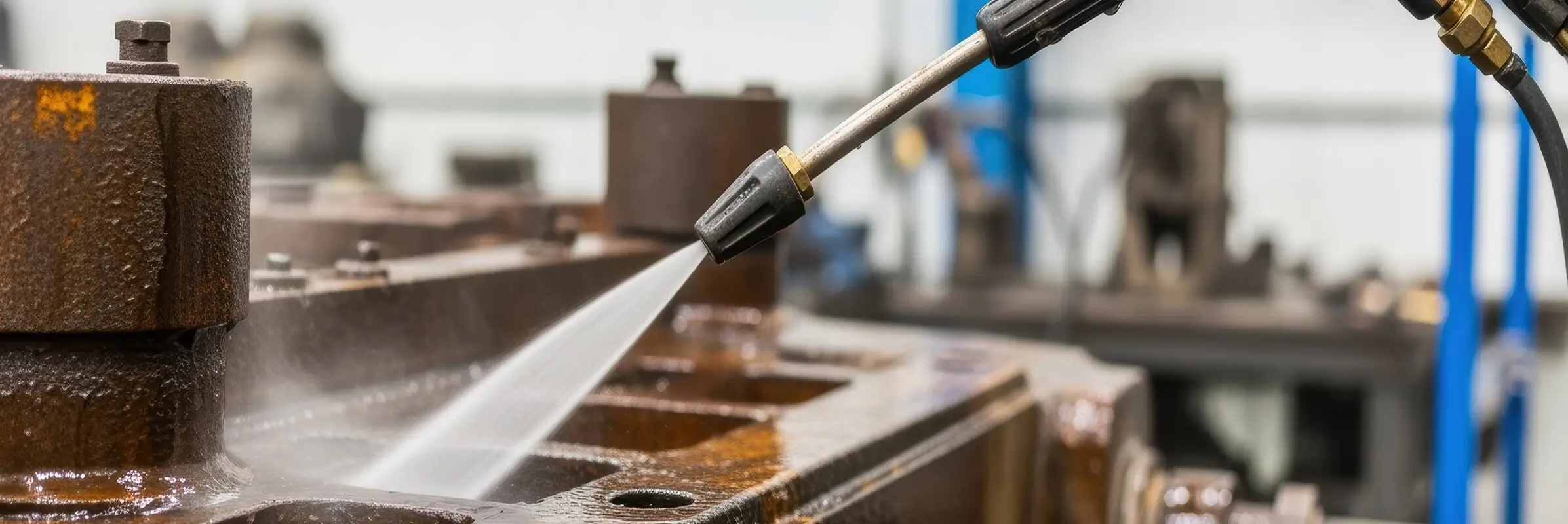
Skipping or shortcutting the cleaning step creates a ripple effect of downstream problems. Residual oils and particulate can compromise paint adhesion, weaken welds or brazed joints, accelerate bearing wear, and cause parts to fail quality inspection. In regulated industries like aerospace and medical device manufacturing, cleanliness specifications are tightly controlled, and noncompliance can mean rejected shipments, costly rework, or lost contracts.
Factory hygiene equipment also plays an important role in workplace safety. Properly cleaning components before they move through a facility reduces the risk of workers being exposed to hazardous chemical residues, sharp metal burrs, or slippery oil films. In short, reliable factory machinery cleaning solutions protect product quality, production efficiency, and the people on your shop floor.
Cleaning Chemistry: Aqueous vs. Solvent-Based Systems
Before exploring the specific types of factory cleaning equipment, it helps to understand the two primary cleaning chemistries at work in modern parts washing.
Aqueous (Water-Based) Cleaning
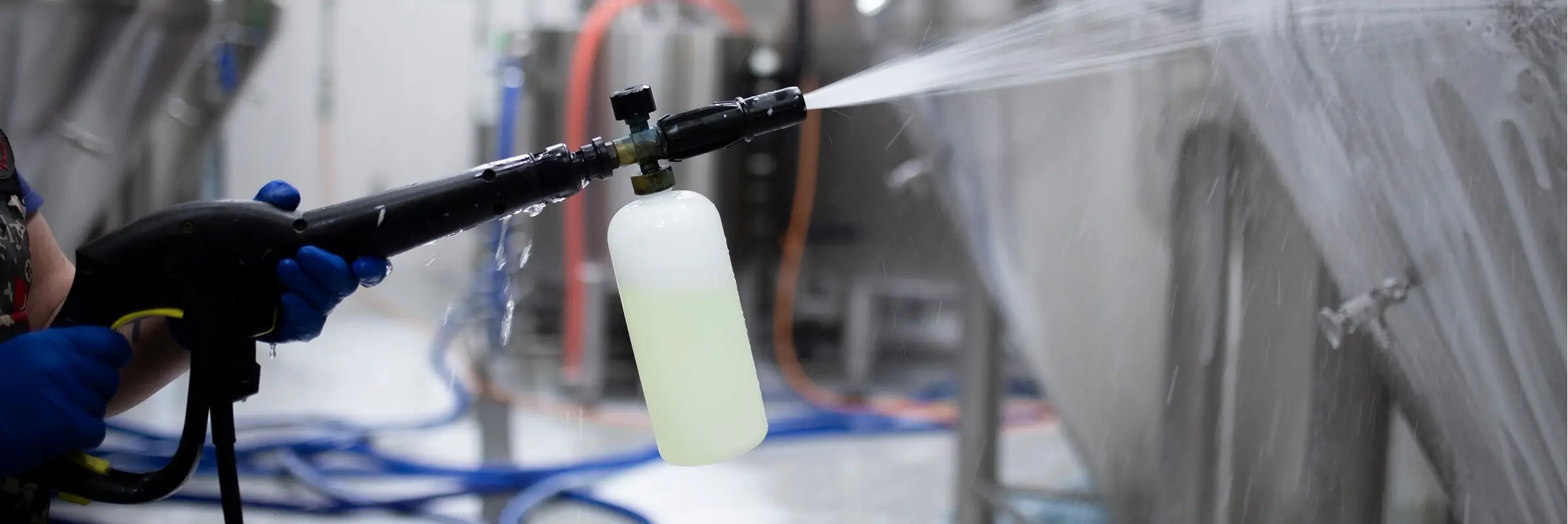
Aqueous parts washers use water combined with specially formulated detergents, surfactants, and builders to break down and remove contaminants. These systems rely on a combination of chemical action, heat, and mechanical energy (such as spray pressure or agitation) to achieve thorough cleaning. Aqueous cleaning has become the dominant approach in modern manufacturing. Water-based solutions are biodegradable, produce significantly fewer volatile organic compounds (VOCs), and create a safer working environment for operators. They also simplify regulatory compliance by avoiding many of the hazardous waste handling and disposal requirements associated with chemical solvents.
Solvent-Based Cleaning
Solvent-based parts washers use chemical agents such as mineral spirits, petroleum-based solvents, or modified alcohols to dissolve heavy oils, greases, and stubborn deposits. While effective against certain types of soil, these systems carry significant drawbacks. They produce harmful emissions, require specialized storage and waste disposal procedures, and present health risks to operators through chemical exposure.
Solvent-based cleaning still serves certain heavy-duty applications. However, its share of the market has been declining steadily as aqueous formulations become increasingly capable of handling even the most demanding cleaning challenges.
Types of Factory Cleaning Equipment
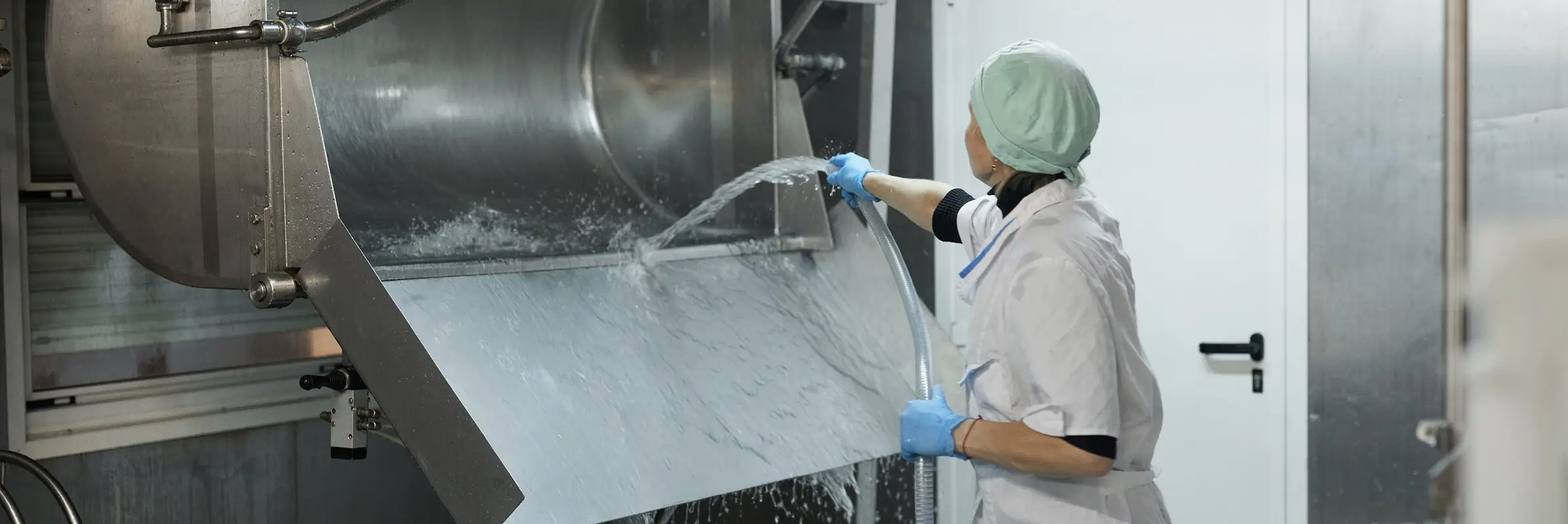
Cleaning equipment for factories comes in a wide variety of configurations. Each type of parts washer is designed to handle different part sizes, geometries, production volumes, and cleanliness requirements. Below is an overview of the most common systems.
Cabinet Washers
A cabinet washer is an enclosed system where parts are placed on a turntable or rack inside a sealed chamber. Spray nozzles direct heated cleaning solution at the parts from multiple angles while the turntable rotates, ensuring full surface coverage.
Cabinet washers are well-suited for batch cleaning of small to medium-sized parts. They’re popular in job shops, maintenance departments, and lower-volume production environments because of their compact footprint and straightforward operation. If your facility handles intermittent cleaning jobs or a moderate variety of part types, a cabinet washer is often a practical starting point.
Conveyor (Tunnel) Washers
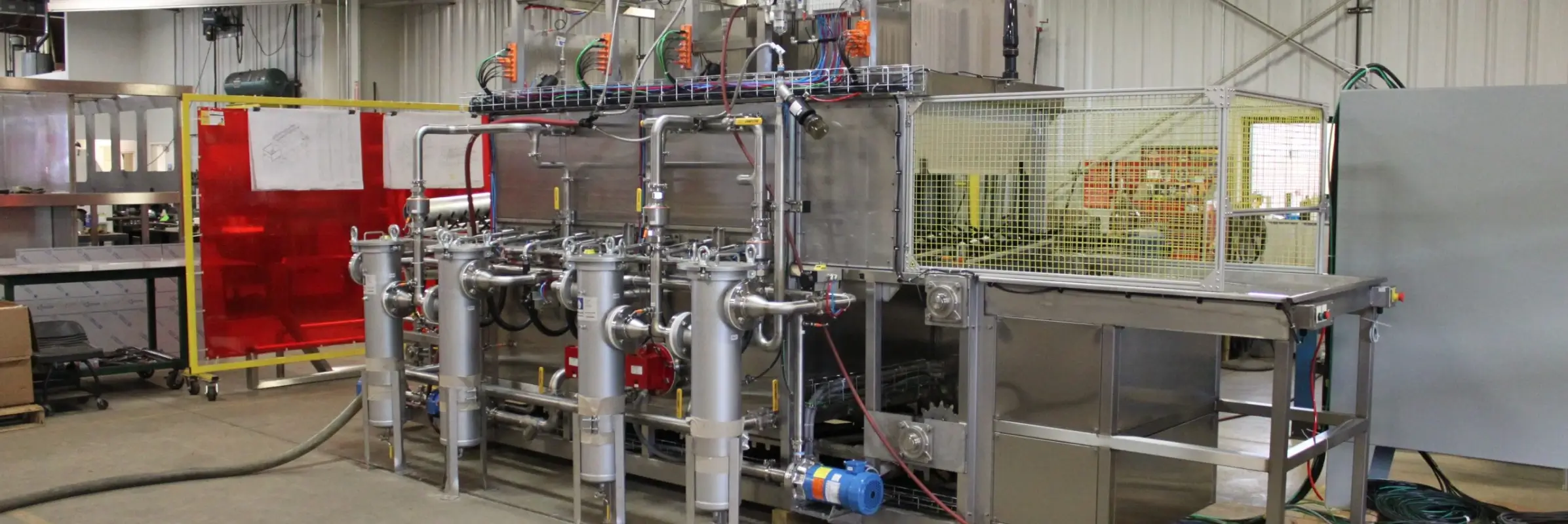
Conveyor washers are designed for high-volume, continuous-flow production. Parts are loaded onto a belt or into baskets that travel through multiple stages, typically including pre-wash, wash, rinse, and drying zones.
Because they integrate directly into production lines, conveyor washers minimize manual handling and maintain high throughput. They’re a natural fit for automotive manufacturing, engine and transmission plants, and other operations where large quantities of parts need consistent, hands-free cleaning at production speed.
Carousel (Rotary Index) Washers
Carousel washers use a rotating platform to move parts through a series of wash, rinse, and dry stations arranged in a circular layout. This design achieves multi-stage cleaning in a significantly smaller footprint than a linear conveyor system.
If your factory floor cleaning equipment needs to balance high cleanliness standards with limited available space, carousel washers are worth serious consideration. They combine the multi-stage capability of a conveyor system with a much more compact arrangement.
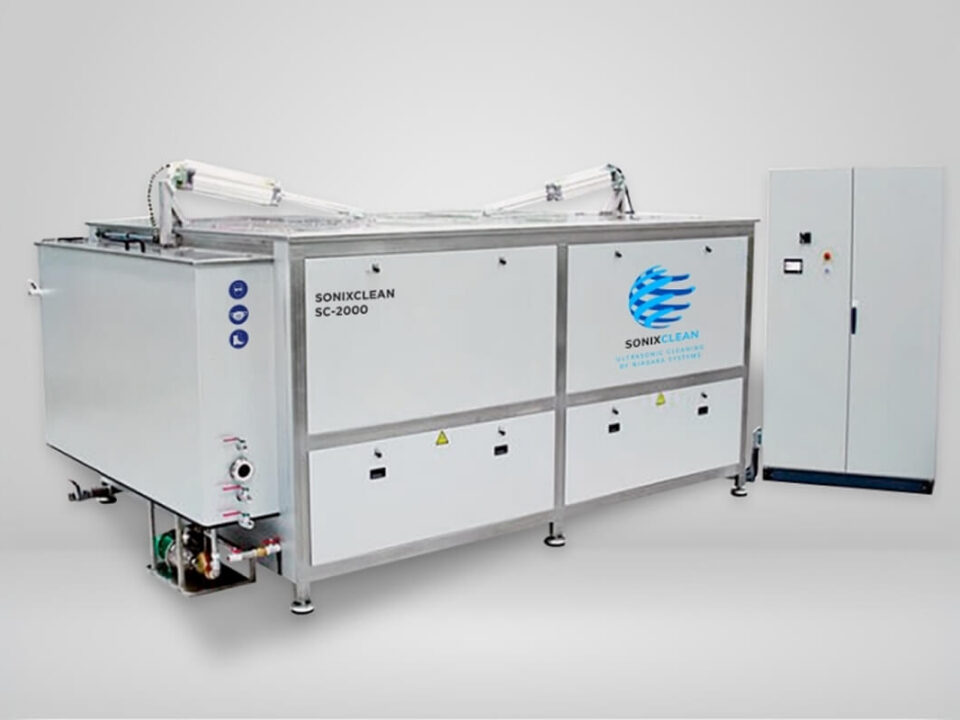
Immersion and Ultrasonic Washers
Immersion washers clean parts by submerging them in a tank of heated cleaning solution, sometimes with mechanical agitation to improve the cleaning action. Ultrasonic washers take this approach further by using high-frequency sound waves to create millions of microscopic cavitation bubbles in the solution. When these bubbles collapse, they release intense localized energy that dislodges contaminants from surfaces that spray-based systems simply can’t reach: blind holes, internal passages, threads, and tight crevices.
Ultrasonic cleaning is widely used in aerospace, medical device, electronics, and precision manufacturing applications where exacting cleanliness standards are non-negotiable.
How to Choose the Right Factory Parts Washer
Selecting the right cleaning equipment for your factory involves evaluating several key variables:
- Part characteristics: The size, weight, geometry, and material of your parts will narrow the field quickly. Components with complex internal passages or blind holes may require immersion or ultrasonic cleaning, while larger, simpler parts may be effectively handled by a spray cabinet or conveyor system.
- Contaminant type: The nature of the soils being removed (light cutting oils vs. heavy greases vs. carbon deposits vs. metal chips) will influence both the machine configuration and the cleaning chemistry required.
- Production volume: A maintenance shop cleaning a few dozen parts per shift has very different requirements than an automotive plant processing thousands of components per hour. Batch systems like cabinet washers work well at lower volumes, while conveyor and carousel systems are made for continuous, high-throughput production.
- Cleanliness specifications: Some applications require only a general degreasing, while others require parts to meet highly specific particulate and residue thresholds. The required cleanliness level will influence the number of wash and rinse stages, solution temperature, filtration capabilities, and overall system complexity.
- Floor space and facility layout: The physical footprint of factory floor cleaning equipment matters, particularly in crowded production environments. Carousel washers, for example, provide multi-stage cleaning in a compact circular arrangement, while conveyor systems require more linear real estate.
- Automation and integration: Modern factory parts cleaning machines can be equipped with programmable controls, IoT-enabled monitoring, and robotic loading and unloading. For operations pursuing lean manufacturing or Industry 4.0 objectives, the ability to integrate the washer seamlessly into an automated production line is a key consideration.
Custom Factory Cleaning Equipment: When Standard Isn’t Enough
Many cleaning challenges can be addressed with standard washer configurations. But manufacturing is full of unique situations: unusual part geometries, specialized cleanliness requirements, challenging production line layouts, or processes that demand integration with upstream and downstream automation. That’s why custom factory cleaning equipment is essential.
At Niagara Systems, custom engineering is central to what we do. Our team of mechanical, electrical, and controls engineers works closely with each customer to design and build washing systems tailored to their exact specifications. Whether you need a modified cabinet washer with specialized fixturing or a fully automated, multi-stage conveyor system integrated into a complex production line, we engineer solutions that fit your process, not the other way around.
Partner With Niagara Systems
Since 1934, Niagara Systems has been the trusted name in industrial parts washing. We manufacture a full line of world-class washing systems in our state-of-the-art facility in Mentor, Ohio, and we sell and service our equipment worldwide.
Whether you’re exploring factory parts washers for the first time or looking to upgrade your existing cleaning process, our team is ready to help. We’ll work with you to understand your parts, your production requirements, and your cleanliness standards, and then we’ll engineer the right solution for your operation. Contact Niagara Systems today to request a quote or schedule a technical consultation.
Frequently Asked Questions About Factory Cleaning Equipment
Can industrial parts washers be customized to accommodate unique parts or cleaning requirements?
Absolutely. At Niagara Systems, custom engineering is at the core of what we do. Many manufacturing operations involve parts with unusual geometries, tight internal passages, or cleanliness requirements that go beyond what an off-the-shelf machine can address. Custom factory cleaning equipment can be tailored across nearly every aspect of the system, including chamber layout, nozzle placement, fixturing design, cleaning chemistry, cycle programming, filtration, and drying methods.
Can industrial parts washers be integrated with other factory automation systems for streamlined cleaning processes?
Yes, and this is one of the most significant developments in modern factory machinery cleaning solutions. Today’s parts washers use programmable logic controllers (PLCs) to manage cycle timing, temperature, and stage sequencing, and these controllers can connect to your facility’s broader automation network. Newer systems also incorporate IIoT (Industrial Internet of Things) sensors that monitor parameters like wash temperature, pump pressure, and chemical concentration in real time.
How can industrial parts washers help factories meet regulatory and industry cleanliness standards?
Different industries are governed by different cleanliness frameworks. Aerospace manufacturers must meet FAA, SAE, and OEM specifications, often validated through methods like water-break-free testing and particle count analysis. Medical device manufacturers must comply with FDA and ISO standards, requiring components to be free of bioburden and residues. Food and beverage operations must satisfy HACCP and FDA sanitation requirements. Industrial parts washers are engineered to meet these standards through multi-stage wash and rinse cycles, precision filtration, controlled solution temperatures, and validated drying processes.