How to Choose the Best Parts Washer Solvent: What to Know Before You Buy
April 23, 2026
3-A Sanitary Standards Explained: Official Guidelines and Best Practices for Manufacturing
June 30, 2026
What Does “Sanitary” Mean in Manufacturing? A Guide to Hygienic Design
When a piece of equipment is described as “sanitary” in a manufacturing context, it means something very specific, not a general reference to cleanliness. So what does sanitary mean in this setting, and why should manufacturers care?
At Niagara Systems, we’ve been designing industrial washing systems since 1934 for manufacturers in food and beverage, pharmaceutical, and medical device production. We’ve engineered sanitary wash solutions for everything from small machined castings with deep internal passages to full-scale conveyor systems processing thousands of totes per shift. That experience has taught us exactly where sanitary design succeeds and where it breaks down in practice.
In this guide, we’ll break down the meaning of sanitary design in manufacturing, the principles behind it, the standards that govern it, and how it applies in practice on the factory floor.
Defining Sanitary Design in Manufacturing
Sanitary design in manufacturing refers to a set of engineering principles applied to equipment, facilities, and processes to minimize contamination risk and enable effective cleaning and sanitation. The goal is to ensure that every surface, joint, enclosure, and component can be thoroughly cleaned, inspected, and maintained throughout its operational life.
This concept originated in food processing, where contamination from bacteria, allergens, or chemical residues poses direct risks to public health. The American Meat Institute (now the North American Meat Institute, or NAMI) developed the foundational “10 Principles of Sanitary Equipment Design” to give equipment manufacturers and food processors a shared framework for evaluating hygienic performance. Since then, organizations like 3-A Sanitary Standards, Inc., NSF International, and the FDA have expanded and codified these principles into formal standards and certification programs.
While the roots of sanitary design are in food and beverage, the principles apply broadly. Pharmaceutical manufacturers, medical device producers, cosmetics companies, and biotech firms all operate under similar requirements: equipment must be constructed so that contaminants cannot accumulate, hide, or survive the cleaning process.
Core Hygienic Design Principles
Although specific standards vary by industry and regulatory body, the hygienic design principles that underpin them share common ground. Here are the concepts that matter most.
- Cleanability: All surfaces must be smooth, non-porous, and free of crevices or recesses where residues could accumulate. Stainless steel (typically AISI 304 or 316) is the preferred material for contact surfaces, with food-grade applications generally requiring surface roughness (Ra) values of 0.8 micrometres or less.
- Accessibility: Every component that requires cleaning, inspection, or maintenance must be reachable. Equipment should allow easy disassembly and reassembly, and clean-in-place (CIP) systems should be used where manual access is limited.
- Self-draining construction: Pooled liquid promotes bacterial growth. Equipment must be shaped so that wash water, product residues, and condensation drain completely, with no flat surfaces or low points where fluid can collect.
- No harborage points: Welds must be continuous and fully penetrating, with no gaps, open seams, lap joints, or dead ends. Hollow areas should be sealed permanently or eliminated, and fasteners should be continuously welded rather than attached through drilled holes.
- Material compatibility: All construction materials must be compatible with the products being processed, the cleaning chemicals used, and the operating environment. Materials must be non-absorbent, non-toxic, and corrosion-resistant under expected conditions.
- Validated sanitation procedures: Hygienic design in manufacturing extends beyond hardware. Facilities must maintain documented cleaning and sanitation protocols that have been validated as effective, ensuring that design and practice work together.
Standards and Regulatory Frameworks
The regulatory landscape for sanitary equipment can be disorienting, especially for manufacturers who operate across multiple frameworks simultaneously. Here’s how the major frameworks break down.
In the United States, the FDA’s Current Good Manufacturing Practices (cGMPs), codified under 21 CFR Part 117, establish baseline requirements for food facility design, equipment construction, and sanitation. The USDA’s Food Safety and Inspection Service (FSIS) pre-approves equipment for use in meat, poultry, and egg processing facilities. For pharmaceutical operations, FDA cGMPs under 21 CFR Parts 210 and 211 set parallel requirements for drug manufacturing equipment and facilities.
On the standards side, 3-A Sanitary Standards provide widely recognized criteria for hygienic equipment used in dairy, food, beverage, and pharmaceutical processing. EHEDG guidelines are the primary reference in Europe, supported by the EU Machinery Directive (2006/42/EC) and the harmonized standard EN 1672-2:2020 for food processing machinery. NSF International and the Global Food Safety Initiative (GFSI) also publish benchmarking requirements that include hygienic design criteria for both equipment manufacturers and facility operators.
Certification under these programs signals to regulators, auditors, and customers that equipment has been independently evaluated against recognized hygienic criteria.

Practical Applications: Hygienic Design on the Factory Floor
Understanding hygienic design principles is one thing; implementing them is another. Here is how these concepts translate into real decisions on the factory floor.
Equipment Selection
When evaluating new equipment, manufacturers should assess whether surfaces are smooth and free of harborage points, whether the unit can be fully disassembled for cleaning, whether materials are compatible with required cleaning agents, and whether the design supports self-draining operation.
Bringing sanitation managers into the equipment evaluation process early is one of the most effective ways to identify potential problems before they become embedded in a production line.
Facility Layout
Sanitary design extends to the building itself:
- Production flow should move in one direction to prevent cross-contamination.
- Walls, floors, and drainage systems must be constructed from materials that resist moisture and bacterial growth.
- Lighting in processing and inspection areas must be sufficient for visual verification of cleanliness.
- Air handling systems require appropriate filtration based on the risk level of the products being manufactured.
Washing Systems
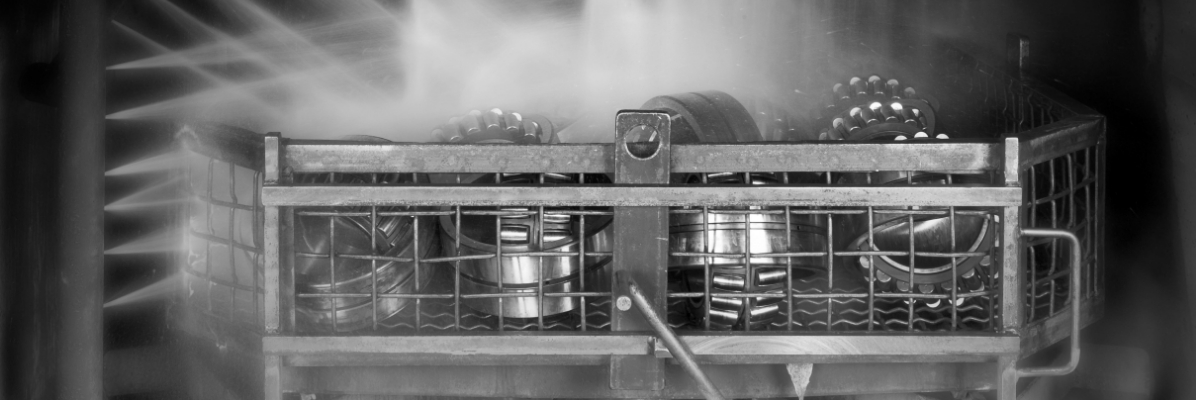
Industrial sanitary washing systems play a central role in maintaining hygienic conditions. Parts, totes, containers, molds, and processing components all require thorough, repeatable cleaning between production runs.
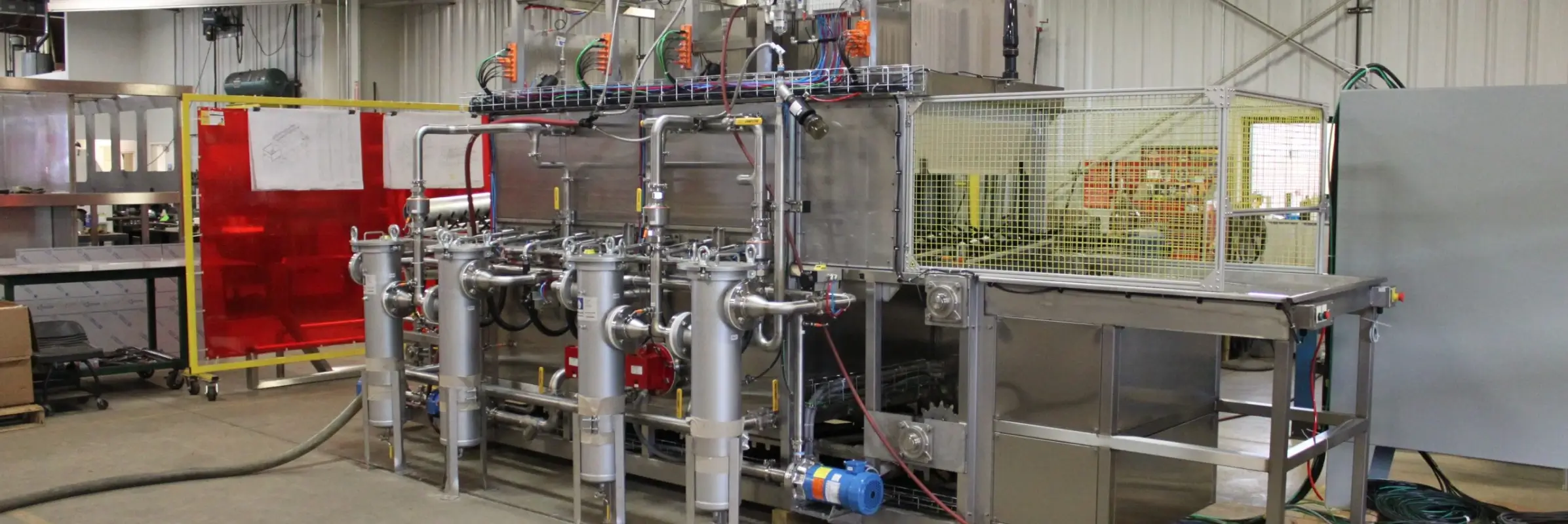
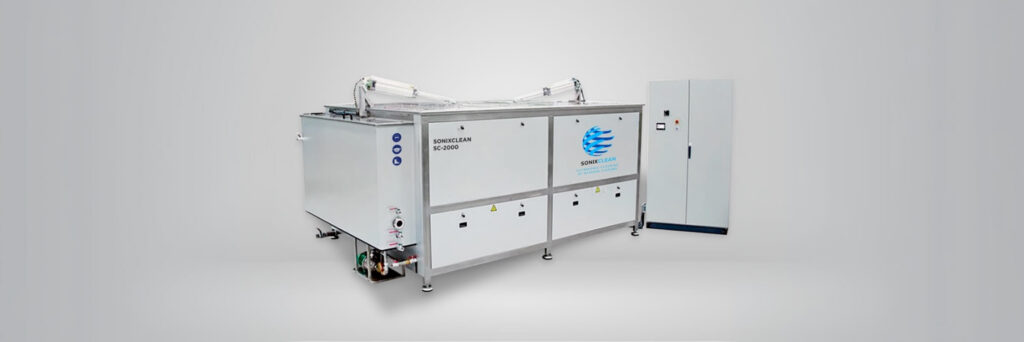
At Niagara Systems, we design and build washing systems from 304 and 316 stainless steel with CIP capabilities, sanitary welding, and configurations that support HACCP, FDA, and USDA compliance. Whether you’re cleaning food processing components, pharmaceutical equipment, or packaging materials, the washing system must be as hygienically designed as the production equipment it serves.
Ongoing Maintenance and Verification
Sanitary design is not a one-time investment. Equipment surfaces degrade over time through wear, chemical exposure, and mechanical stress.
Facilities must establish inspection schedules to identify corrosion, damaged seals, pitting, and surface roughness changes that could compromise cleanability. Documentation of cleaning cycles, maintenance activities, and inspection results creates the audit trail that regulators expect.

The Benefits Beyond Compliance
Meeting regulatory requirements is essential, but the benefits of sanitary design go further. Equipment that is easy to clean reduces the time and labor required for sanitation between production runs, which directly improves uptime and throughput. Fewer harborage points and better drainage reduce the risk of contamination events that can trigger product recalls, facility shutdowns, and lasting reputational damage. And in an era of increasing consumer awareness around product safety, a strong commitment to hygienic design in manufacturing signals credibility and care at every level of the operation.
Niagara Systems Custom Solutions
Every cleaning challenge is different. Watch how Niagara Systems designs and builds custom industrial washing systems tailored to your specific parts, contaminants, and compliance requirements.
Build Cleanliness into Your Process With Niagara Systems
Sanitary design is a foundational discipline for any manufacturer operating in a regulated environment. It shapes how equipment is built, how facilities are laid out, and how cleaning processes are designed and verified.
At Niagara Systems, we understand this discipline from the inside. We build industrial washing systems for manufacturers who need to meet the highest standards of hygienic performance, and we engineer every system with sanitary design principles at the core. Contact Niagara Systems to request a quote or schedule a consultation.
Frequently Asked Questions About Sanitary Design in Manufacturing
What are the consequences of failing to meet sanitary design standards in manufacturing?
Manufacturers that fall short of sanitary standards risk FDA warning letters, facility shutdowns, fines, and product recalls that can cost millions. Contamination events have been traced directly to equipment design flaws, such as harborage points in improperly welded joints or surfaces that could not be adequately cleaned. Beyond the financial costs, a single recall can erode consumer trust and damage relationships with regulators, retailers, and distribution partners.
How does automated parts washing improve sanitary compliance on the factory floor?
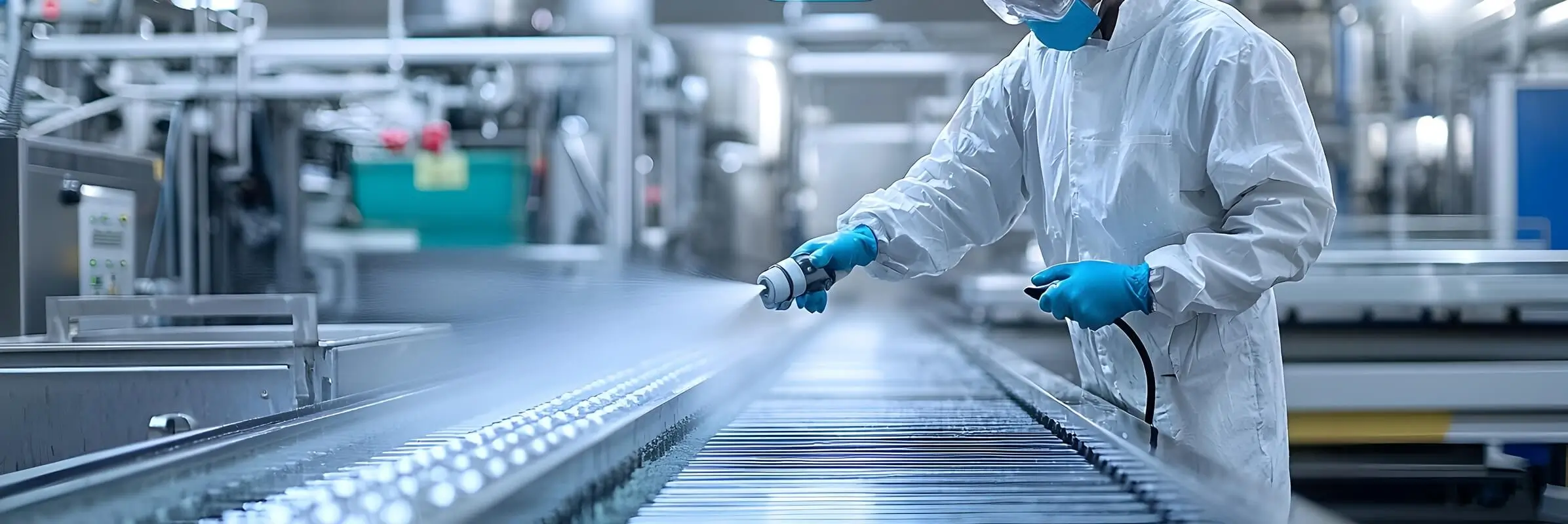
Manual cleaning introduces variability at every step: water temperature, chemical concentration, dwell time, spray angle, and operator technique all shift from cycle to cycle and shift to shift. In a regulated environment, that variability is a liability. Automated sanitary washing systems lock in validated process parameters and execute them identically every time. That means a cleaning process can be validated once and relied on continuously, with automated data logging that gives auditors the documentation trail they expect.
Does Niagara Systems offer custom solutions for sanitary equipment or facility design in manufacturing environments?
Yes. We design and build custom industrial washing systems for manufacturers in regulated industries, including food and beverage, pharmaceutical, medical device, and general manufacturing. Our systems are constructed from 304 and 316 stainless steel with sanitary welding, and can be configured with CIP capabilities, multi-stage wash and rinse cycles, HEPA filtration, and drying systems tailored to your cleanliness requirements. Contact us to discuss your specifications and request a quote.