Factory Cleaning Equipment 101: Understanding Industrial Parts Washers
March 25, 2026
How to Choose the Best Parts Washer Solvent: What to Know Before You Buy
April 23, 2026
What Is a Solvent Cleaner? A Complete Guide for Parts Washing and Industrial Cleaning
A solvent cleaner is a chemical substance, typically a liquid, that dissolves contaminants like grease, oil, wax, and carbon residue from the surfaces of industrial parts. Unlike water-based alternatives that rely on detergents and heat, a solvent-based cleaner works by surrounding soil molecules and breaking apart the bonds that hold them to a surface. This makes solvent cleaners especially effective for removing hydrophobic contaminants that water alone can’t touch.
If you work in manufacturing, automotive production, aerospace, or any industry that relies on precision-cleaned components, understanding what a solvent cleaner is and how it fits into your parts-washing process can directly impact your product quality and compliance outcomes.
How Does a Solvent Cleaner Work?
The science behind a solvent-based cleaner is rooted in a principle called “like dissolves like.” Organic solvents share a similar chemical structure with many industrial contaminants, particularly petroleum-based oils and greases. When a solvent contacts a contaminated surface, its molecules surround the soil particles, weaken their grip on the substrate, and lift them into the cleaning fluid. The contaminated solvent is then rinsed, filtered, or evaporated away from the part.
This is different from aqueous cleaning, where water-based solutions use surfactants, heat, and agitation to emulsify soils. Solvent cleaning often requires less heat, and many solvent-based parts washers operate at or near room temperature. That’s why they’re sometimes referred to as “cold tank” washers, while aqueous systems are often called “hot tank” washers.
The boiling point of a given solvent plays an important role in its performance. Low-boiling-point solvents evaporate quickly at room temperature, making them useful for fast-drying applications. High-boiling-point solvents require added heat or airflow to evaporate, giving operators more contact time with the contaminant before the fluid dissipates.
Common Types of Parts-Cleaning Solvents
Most industrial solvent-based cleaners fall into a few broad chemical categories. Each has specific strengths depending on the contaminant, the substrate material, and the facility’s regulatory requirements.
- Hydrocarbon solvents include petroleum-derived liquids like mineral spirits and kerosene. These are widely used for dissolving oils, greases, and cutting fluids on metal parts. They tend to be cost-effective but are often flammable, requiring careful handling and ventilation.
- Oxygenated solvents contain oxygen in their molecular structure and often come from petroleum products. Common examples include acetone, methyl ethyl ketone (MEK), and isopropyl alcohol. They offer strong solvency and relatively low toxicity, making them popular in cleaning and manufacturing processes.
- Halogenated solvents contain halogen atoms such as chlorine or fluorine. Trichloroethylene (TCE) and perchloroethylene (PCE) are examples that have been widely used in vapor degreasing. These solvents are effective at removing stubborn residues but pose significant health and environmental risks, leading to stricter regulation and a push toward safer alternatives.
- Aromatic solvents feature a benzene ring molecular structure. Toluene and xylene are common examples. They work well as degreasing agents but can pose inhalation risks and are typically subject to VOC (volatile organic compound) limits.
Choosing the right parts-cleaning solvents depends on the type of soil you need to remove, the material your parts are made of, your facility’s ventilation capacity, and any local or federal regulatory limits on emissions.
Where Solvent Cleaners Are Used in Industrial Parts Washing
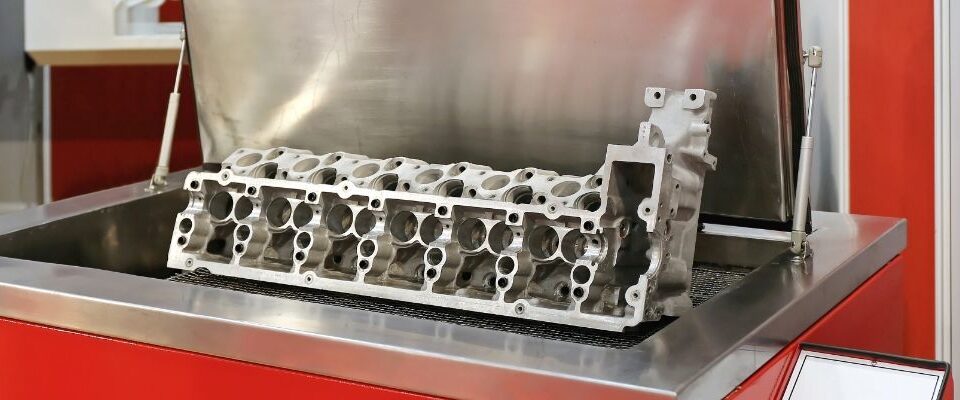
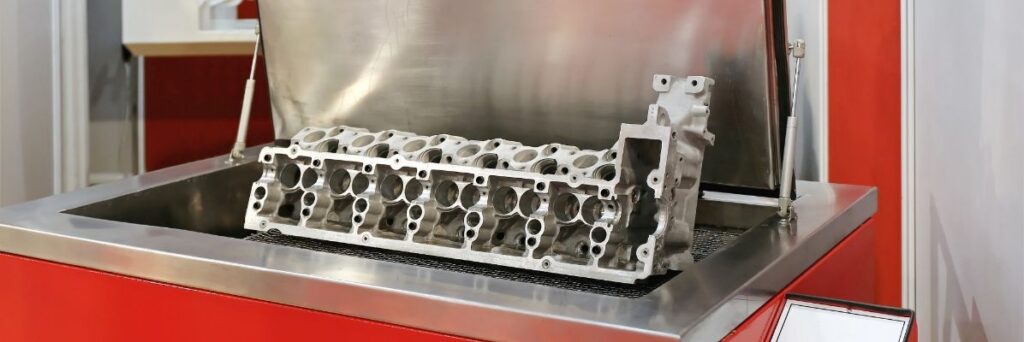
Solvent cleaners are found across a broad spectrum of industrial environments. In heavy manufacturing, solvent-based parts washers remove cutting fluids, machining oils, and metal shavings from components fresh off CNC machines and stamping presses. In automotive production, solvents cut through the dense grease and carbon buildup found on engine blocks, transmissions, and braking assemblies.
Aerospace facilities use parts cleaning solvents for precision degreasing, where even microscopic residue on a component can lead to mechanical failure. Electronics manufacturers rely on specialized solvents to remove solder flux from circuit boards without leaving residue behind.
These applications highlight why understanding what a solvent-based cleaner can do is critical to selecting the right cleaning chemistry. The contaminant, the part geometry, and the required cleanliness standard all influence the decision.
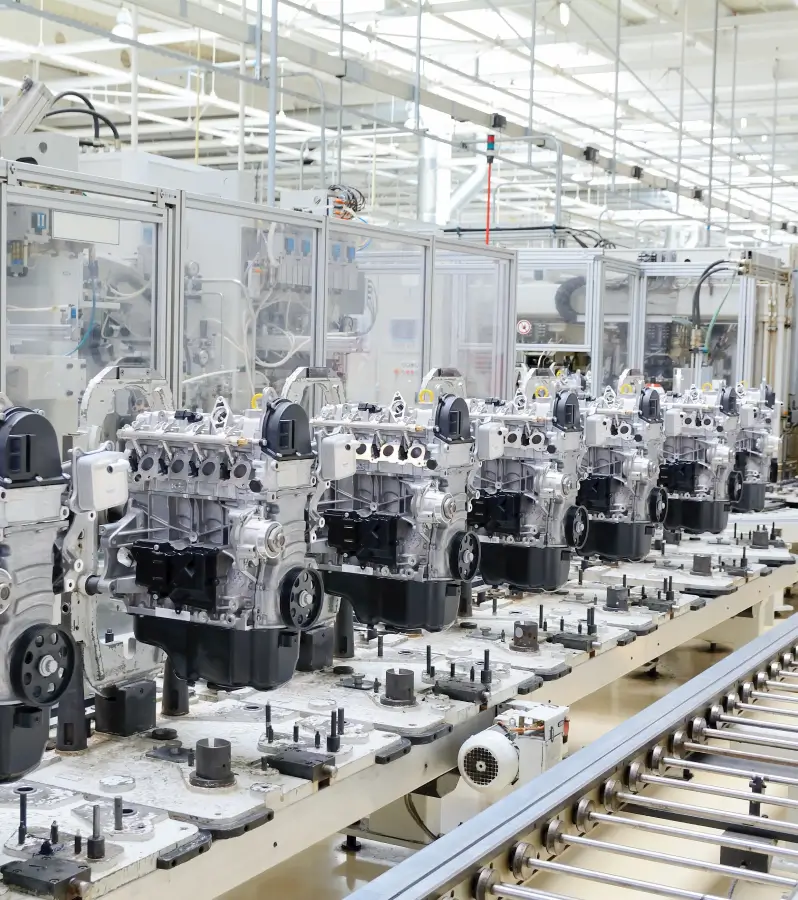
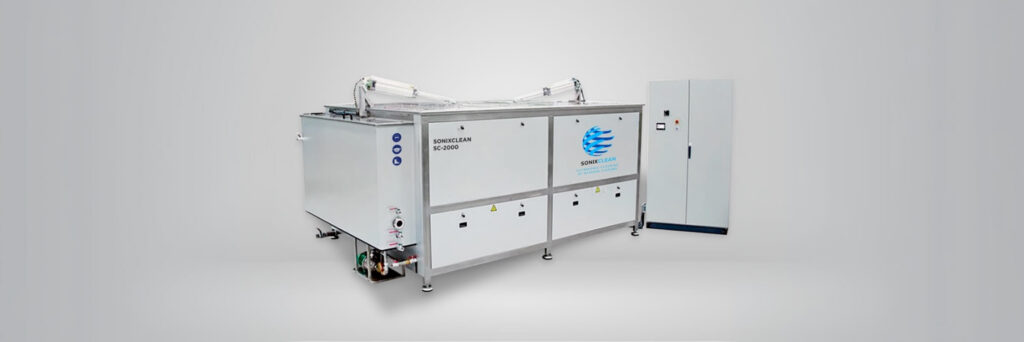
For facilities running high-volume production lines, industrial parts washers built to handle solvent-based chemistry help maintain cleaning consistency while reducing manual labor. At Niagara Systems, we design standard and custom-engineered parts washing systems that accommodate solvent-based workflows, giving manufacturers the flexibility to pair the right chemistry with the right equipment.
Solvent-Based Parts Washers vs. Aqueous Parts Washers
One of the most common decisions in industrial cleaning is choosing between a solvent-based parts washer and an aqueous system. Both have legitimate applications, and the right choice depends on the specifics of your operation.
A solvent-based parts washer uses an organic cleaning liquid to dissolve soils directly. These systems often operate without heat, which can reduce energy costs and speed up cycle times. Some solvent-based systems also include recycling, where the solvent is distilled and returned to the wash basin for reuse, extending the useful life of a single cleaning solvent application in parts washer operations.
Aqueous systems, on the other hand, use water mixed with detergents, surfactants, or alkaline compounds at elevated temperatures. They tend to perform well on mixed soils, fines, oxides, and water-soluble residues. Aqueous cleaning is often preferred for food processing, pharmaceutical, and laboratory applications, where chemical residues left by solvents could compromise product safety.
Here’s a quick comparison:
- Solvent systems excel at dissolving heavy oils, waxes, machining fluids, and carbon-rich residues. They often dry faster and can be energy efficient in cold-tank configurations.
- Aqueous systems handle mixed contaminant loads well and produce fewer VOC emissions. They typically require heated wash stages, rinse cycles, and filtration to maintain bath quality.
Neither approach is universally superior. The best cleaning solvent for parts washer setups in your facility will depend on the soil type, part material, throughput requirements, and regulatory landscape you operate within. For a deeper look at the differences, see our guide to industrial cleaning solvents vs. solutions.
How Solvent Cleaners Fit Into Automated Parts Washing Systems
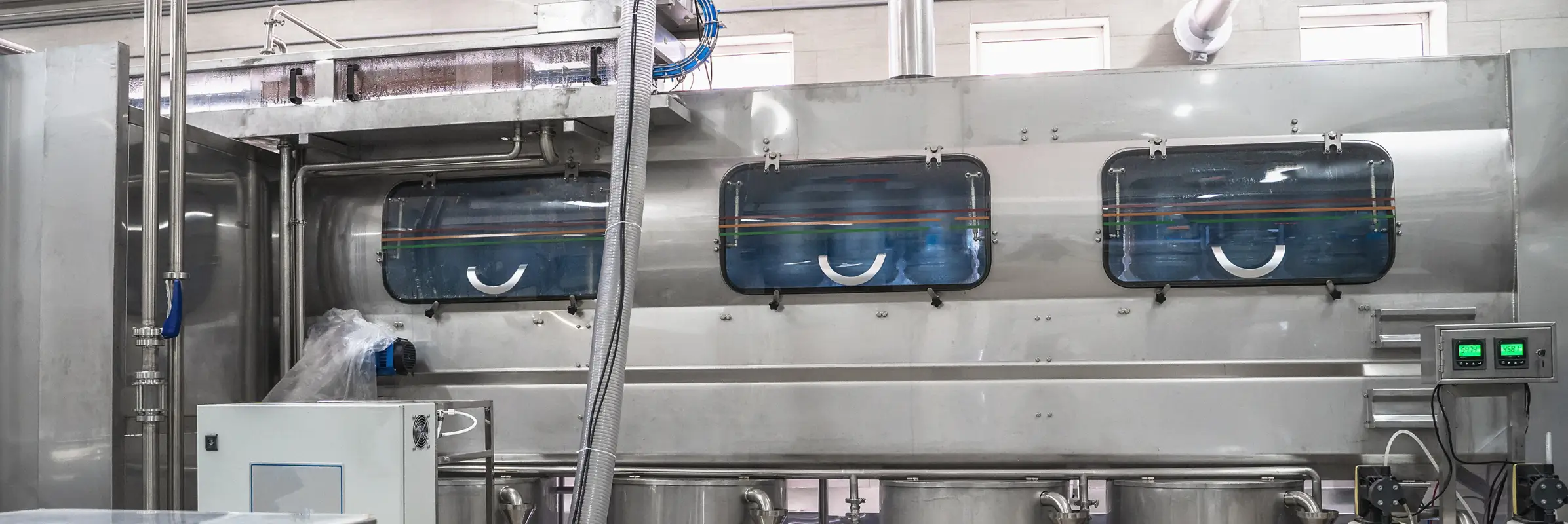
In a modern automated parts washer, solvent cleaning is far more controlled than a simple soak-and-rinse process. Industrial parts washing systems built for solvent-based chemistry use pumps, spray manifolds, immersion tanks, and filtration systems to ensure consistent contact between the solvent and the contaminated surface.
For example, we can configure tunnel washers with multiple stages where parts move through solvent application, agitation, and drying on a conveyor. Cabinet-style washers offer enclosed batch processing for lower-volume operations. Carousel systems use a rotating platform to cycle parts through cleaning stages while minimizing the machine’s footprint on the floor.
At Niagara Systems, we build our industrial parts washers to work with whichever chemistry your application requires. Our tunnel washers use either solvent-based or aqueous solutions, depending on your needs, and we build every system with PLC controllers and HMI touchscreens, so operators can adjust cleaning parameters on the fly. We also offer custom configurations with immersion zones, high-contact flow paths, and containment features, specifically designed for solvent-based workflows.
Best Practices for Using Solvent Cleaners in Parts Washing
Getting the most out of your parts-cleaning solvents requires attention to a few operational details.
First, match the solvent to the contaminant. Polar solvents like isopropyl alcohol work well on water-soluble soils, while nonpolar solvents like mineral spirits are better suited for oils and greases. Using the wrong chemistry wastes time and solvent.
Second, pay attention to material compatibility. Certain solvents can etch aluminum, damage plastics, or degrade rubber seals. Always confirm that your cleaning solvent for parts washer applications is compatible with every material in the wash load.
Third, manage ventilation and exposure. Many parts-cleaning solvents release VOCs during use. Proper ventilation, personal protective equipment (PPE), and compliance with local air quality regulations are all necessary for safe operation.
Fourth, monitor solvent quality over time. As solvents absorb contaminants, their cleaning effectiveness drops. Filtration, distillation, and scheduled solvent replacement keep your system performing at its best. For guidance on choosing the right chemistry, check out our resource on the best parts washer solvent for your application.
Custom Solutions Tailored to Your Needs
Explore our process, and experience how Niagara Systems develops custom washing systems built to each customer’s requirements.
Get the Right Equipment for Your Cleaning Chemistry
Since 1934, Niagara Systems has been designing and manufacturing industrial parts washers that solve complex cleaning problems for facilities around the globe. Our engineering team can evaluate your contaminants and production requirements to recommend a parts washing system built for solvent-based, aqueous, or combination cleaning workflows. Request a quote today and let our team build a solution that fits your exact application.
Frequently Asked Questions
How do I dispose of used solvent from a parts washer?
Disposal requirements depend on the type of solvent and the contaminants it has absorbed. Low-flash-point solvents like mineral spirits are typically classified as hazardous waste under the Resource Conservation and Recovery Act (RCRA) and must go through a licensed hazardous waste hauler. High-flash-point solvents (above 140°F) may avoid that classification, but they can still become hazardous if contaminated with regulated materials. Many facilities work with solvent recycling services that pick up used solvent on a scheduled basis, distill it, and return clean product. Before choosing a disposal method, check your state’s environmental agency guidelines and confirm that your process meets both federal EPA and local air quality regulations.
What maintenance is required for a parts washer when using solvent cleaners versus other cleaning solutions?
Solvent-based parts washers typically require regular monitoring of solvent clarity and contamination levels, periodic filter replacement, and attention to seals and gaskets that may degrade over time from chemical exposure. If your system includes a distillation or recycling unit, that equipment also needs routine maintenance. Aqueous systems, by comparison, involve more frequent bath monitoring, pH testing, and management of biological growth in the wash solution. Both types benefit from scheduled inspections of pumps, spray nozzles, and heating elements.
Can a single parts washer switch between solvent-based and aqueous cleaning solutions?
Some industrial parts washers are built with the flexibility to run different chemistries, but this requires careful attention to material compatibility. Solvent-based and aqueous solutions may require different seals, gaskets, filtration media, and temperature settings. At Niagara Systems, we design custom washing systems that accommodate specific chemistry requirements. If your operation needs the ability to switch between cleaning approaches, our engineering team can configure a system with the appropriate containment, drainage, and material selections to handle both safely and effectively.