3-A Sanitary Standards Explained: Official Guidelines and Best Practices for Manufacturing
June 30, 2026
Large Industrial Ultrasonic Cleaners for Heavy Loads
September 24, 2026
Ultrasonic Cleaning Frequency Selection Guide for Industrial Parts
Choosing an ultrasonic cleaning frequency comes down to matching cavitation bubble size and energy intensity to your soil type, your part material, and your part geometry. Get that match wrong, and you either leave contamination behind or damage the part while removing it.
This guide assumes you already understand how cavitation works. If you need that foundation first, read How Does Ultrasonic Cleaning Work? The Science Behind the Process.
Here, we’re focused on the configuration decision itself: which frequency band to specify, how much power density to run, and which process controls to layer on top.
The Four Frequency Bands: What Each One Is Built For
Ultrasonic frequency and cavitation bubble size move in opposite directions. Lower frequencies produce fewer, larger bubbles that release more energy on collapse. Higher frequencies produce smaller, more numerous bubbles with gentler, more evenly distributed cavitation intensity.
Neither end of the range is better; each is correct for a different combination of soil and substrate.
| Frequency | Cavitation Bubble Size | Energy Intensity | Ideal Soil Types | Material & Geometry Fit |
| 25 kHz | Largest | Highest | Heavy machining oil, metal chips, baked-on carbon, scale | Large, robust, simple-geometry parts: cast iron blocks, heavy steel weldments, engine blocks |
| 40 kHz | Large to medium | High, more evenly distributed than 25 kHz | General manufacturing soils: cutting oils, coolant residue, moderate grease | Most general industrial parts, including moderately complex geometries and blind holes |
| 80 kHz | Small | Moderate | Light oxide films, fingerprints, fine machining dust, light residues | Precision surfaces, thin-wall components, moderately delicate alloys |
| 120 kHz | Smallest | Lowest, gentlest | Sub-micron films, trace residues, particulates on sensitive finishes | Delicate alloys, polished surfaces, tight-tolerance precision components |
For most general manufacturing parts, 40 kHz remains the default starting point. It is the band where power and even energy distribution overlap most.
If You Need Multiple Bands
Some part families do not fit neatly into one band. A casting with both heavy chip residue and a delicate machined bore needs aggressive scrubbing in one zone and gentle handling in another.
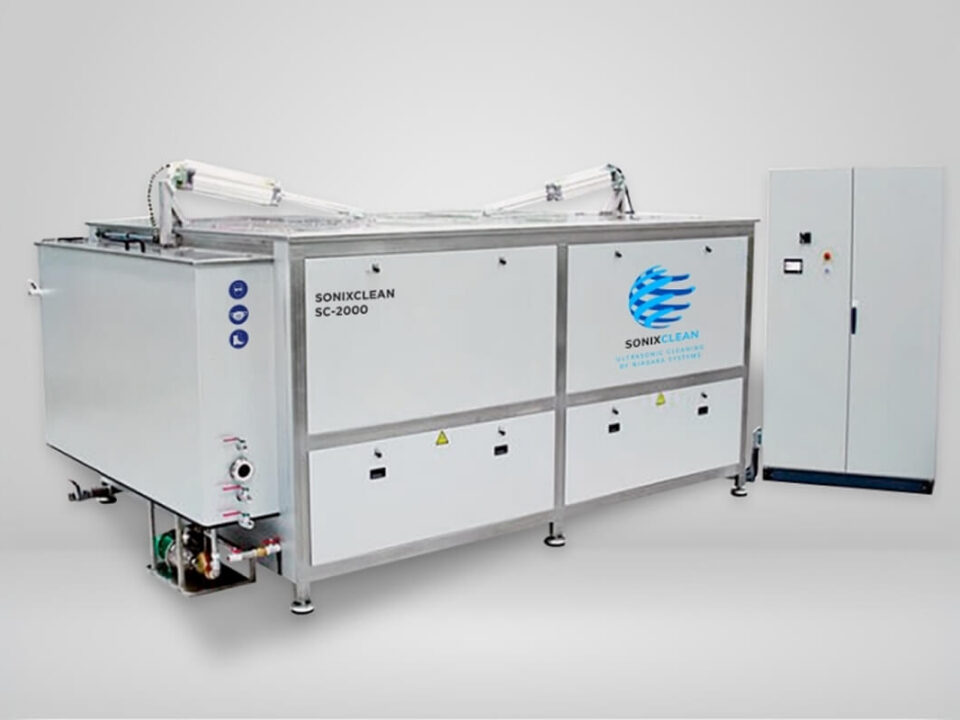
In those cases, a dual-frequency ultrasonic cleaner, or a fully multi-frequency ultrasonic cleaning system running three or four bands in sequence, lets one tank cover both needs without compromising either. Large industrial ultrasonic cleaners for mixed production lines are frequently specified this way.
If you’re still working out tank size, throughput and frequency, our article on The Basics of Ultrasonic Parts Washers and Cleaning Systems covers that groundwork.
Power Density: The Variable That Makes or Breaks Frequency Selection
Frequency selection only works if the tank is running at the right power density, measured in watts per gallon (W/gal). This is where a lot of otherwise correct frequency choices go wrong.
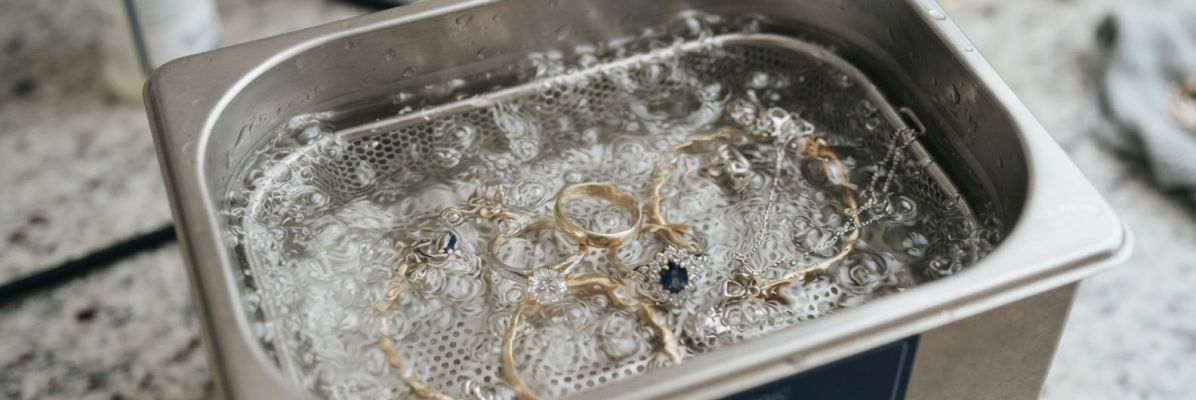
Underpowered systems cannot sustain cavitation. The bubbles form but do not collapse with enough force to release soil, so parts come out looking clean on the surface while contamination remains in blind holes and tight passages. Overpowered systems create the opposite failure: cavitation erosion pits and dulls soft substrates, especially aluminum and brass, sometimes within minutes of exposure.
As a starting point:
- 25 to 50 W/gal for general industrial parts and robust metals
- 10 to 20 W/gal for soft metals, polished surfaces, and other substrates sensitive to cavitation erosion
Power density and frequency have to be specified together. A 25 kHz tank running 40 W/gal on a hardened steel stamping is a reasonable setup. The same power density on a thin-wall aluminum housing is not, regardless of how well the frequency band matches the soil type. This is a common failure point when metal parts washers are specified from a catalog sheet rather than sized to the actual substrate.
Two Process Controls That Fine-Tune Frequency and Power Density
Frequency and power density set the baseline. Two additional controls determine how consistently that baseline performs across the whole tank.
Sweep Frequency
Every fixed-frequency tank produces standing waves: horizontal bands of intense cavitation separated by weaker zones, sometimes called dead zones. A part resting in one of those weaker bands can come out under-cleaned even though the rest of the load looks fine.
Sweep frequency addresses this by continuously shifting the operating frequency by a small amount around the nominal setting, which moves the standing wave pattern rather than holding it fixed. The dead zones stop staying in the same place long enough to have an impact.
Pulse Mode
Pulse mode alternates ultrasonic power on and off in short cycles instead of running continuously. This does two things: it prevents heat buildup in the tank and cleaning solution during long cycles, and it gives cavitation bubbles time to fully collapse and re-form between pulses, which improves soil release compared to continuous high-power operation.
Pulse mode is particularly useful on systems running near the top of their power density range, where continuous operation would otherwise push heat and erosion risk higher than necessary.
Materials and Geometry Chart: What to Specify
| Part Type | Recommended Frequency | Power Density | Notes |
| Aluminum castings with blind holes | 40 kHz | 10 to 20 W/gal | Sweep frequency helps reach internal passages without concentrating energy on the casting surface long enough to erode it |
| Hardened steel stamped parts | 25 to 40 kHz | 25 to 50 W/gal | Hardness tolerates the higher end of the range; useful for stamping lubricant and metal fines |
| Brass fittings | 40 to 80 kHz | 10 to 20 W/gal | Treat brass like aluminum for erosion sensitivity, especially on threaded or polished surfaces |
| Titanium aerospace components | 80 to 120 kHz | 10 to 20 W/gal | Complex geometries and tight cleanliness specifications often call for a dual-frequency ultrasonic cleaner covering both machining residue and fine particulate removal in one cycle |
Parts that fall outside these general categories, or that combine requirements across more than one row, are the reason Niagara Systems’ custom washer division exists. Frequency, power density, sweep, and pulse settings get engineered around the actual part rather than adapted from a stock configuration.
Get the Right Ultrasonic Configuration for Your Application
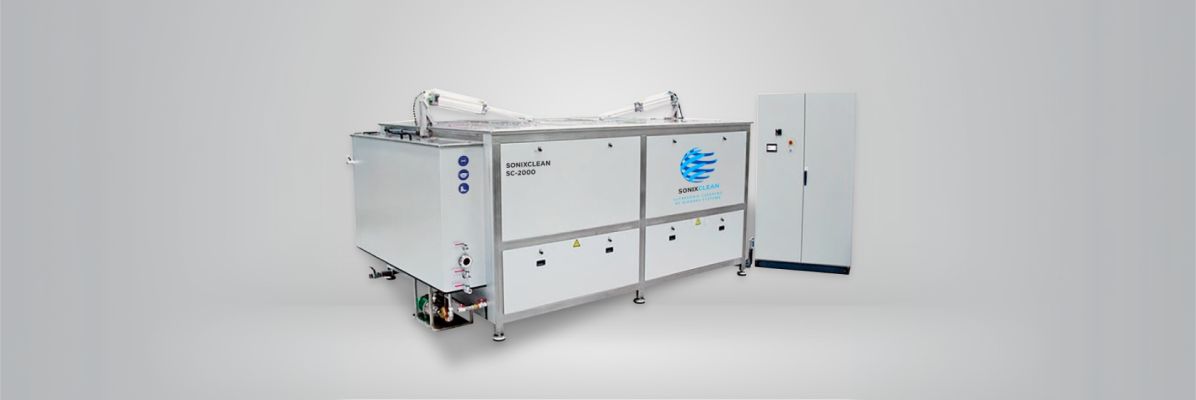
Frequency, power density, sweep, and pulse mode are not independent settings. They have to be specified together against your actual parts, soils, and cleanliness requirements, not chosen off a generic spec sheet. Niagara Systems engineers each SonixClean ultrasonic cleaning system around the application it’s built for, from single-frequency batch tanks to fully custom multi-frequency systems.
Request a Quote to talk through your frequency and power density requirements with a Niagara Systems representative today.
Frequently Asked Questions About Ultrasonic Cleaning Frequency Selection
Why does my ultrasonic tank seem to have areas that aren’t cleaning evenly?
This is almost always because of standing waves. Every fixed-frequency system has bands of strong cavitation separated by weaker zones, and a part sitting in one of those weaker zones for the entire cycle will come out under-cleaned. The sweep frequency is the direct fix, since it keeps shifting the standing wave pattern rather than letting it settle in one place. Part positioning and basket loading also matter; rotating load position between cycles reduces the odds that the same critical surface lands in a dead zone every time.
Do I need to change my ultrasonic frequency if I switch cleaning chemistry?
Not usually, but you should expect to revisit power density, temperature, and cycle time. Different chemistries change surface tension and gas content in the bath, which shifts the cavitation threshold and how aggressively bubbles collapse at a given frequency. At higher frequencies, where scrubbing force is already reduced, the cleaning agent does more of the chemical work that cavitation isn’t providing mechanically, so a chemistry change matters more at 80 to 120 kHz than it does at 25 kHz. Change the frequency itself only if the new chemistry is targeting a genuinely different soil type than the one your current band was chosen for.
What happens if I run a higher power density than recommended for my application?
On robust parts, mostly wasted energy: heat builds faster, the transducers wear sooner, and cleaning performance plateaus rather than improves. On soft or polished substrates, the risk is direct part damage. Cavitation erosion can pit and dull aluminum, brass, and similarly soft metals, sometimes within a few minutes of exposure at the wrong power density. If a part is showing surface changes it didn’t have before it went into the tank, power density above the recommended range for that material is the first thing to check.